Why Frank Lloyd Wright's Fallingwater Still Challenges Architects Today
This iconic structure not only harmonizes with nature but also continues to inspire contemporary designs that push the boundaries of gravity-defying architecture.
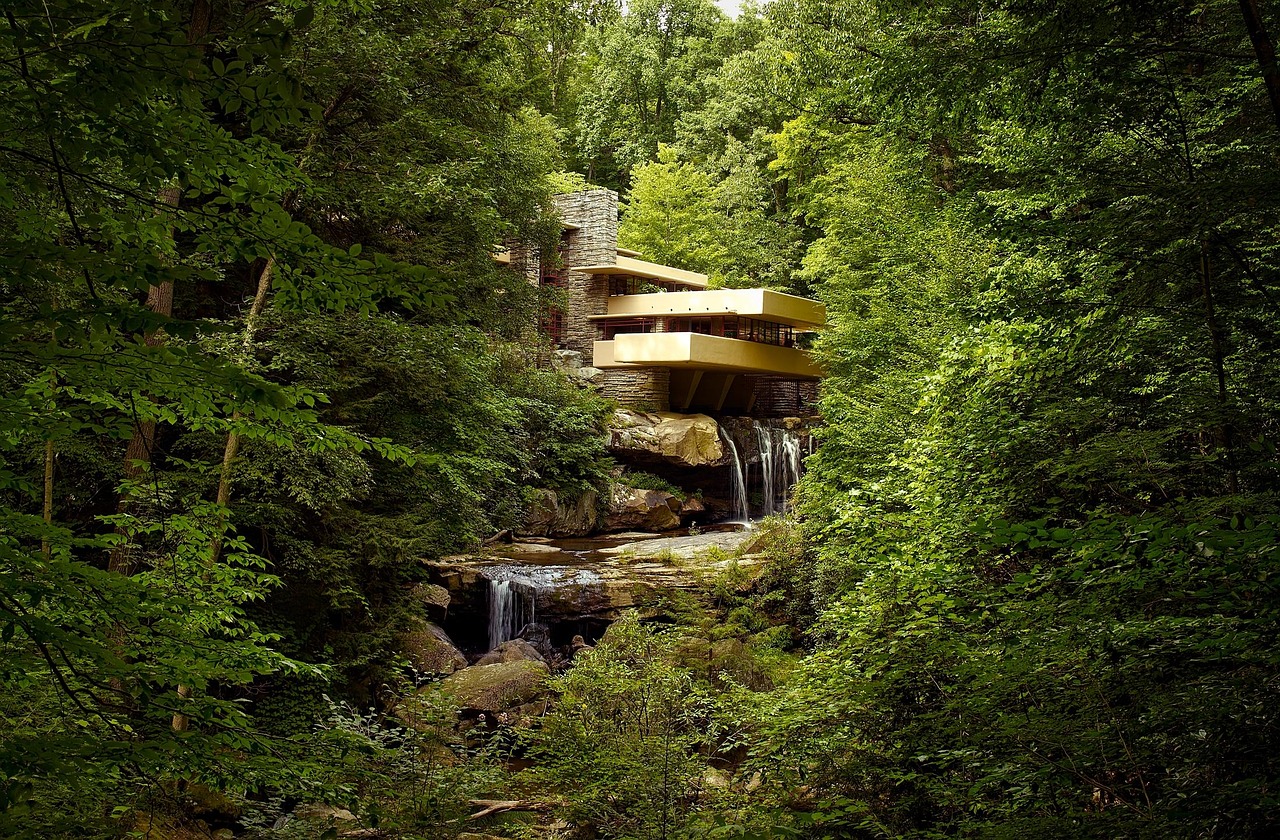
The sound of water cascades beneath the cantilevered balconies, a soothing symphony that lures visitors into a world where nature and architecture intertwine effortlessly.
Frank Lloyd Wright’s Fallingwater emerges from the Pennsylvania hillside like a living organism, its stone walls breathing with the landscape, while the scent of damp earth fills the air.
But what if I told you this masterpiece, completed in 1937, still challenges the very foundations of modern architecture?
As engineers and architects grapple with its daring structure, they discover that Wright’s vision of organic architecture—where buildings exist in seamless unity with their surroundings—poses an enduring question: Can we truly build without disrupting the natural world?
Fallingwater is not just a home; it’s a call to rethink our relationship with the environment and design.
What other structures might inspire us to bridge the gap between humanity and the earth?