What Makes Sankhya Philosophy a Pillar of Indian Thought?
Sankhya is one of the six orthodox schools of Indian philosophy, renowned for its profound dualism that distinguishes between consciousness (Purusha) and matter (Prakriti). This philosophical framework posits that the material world is separate from the self, providing a foundational understanding of existence and reality.
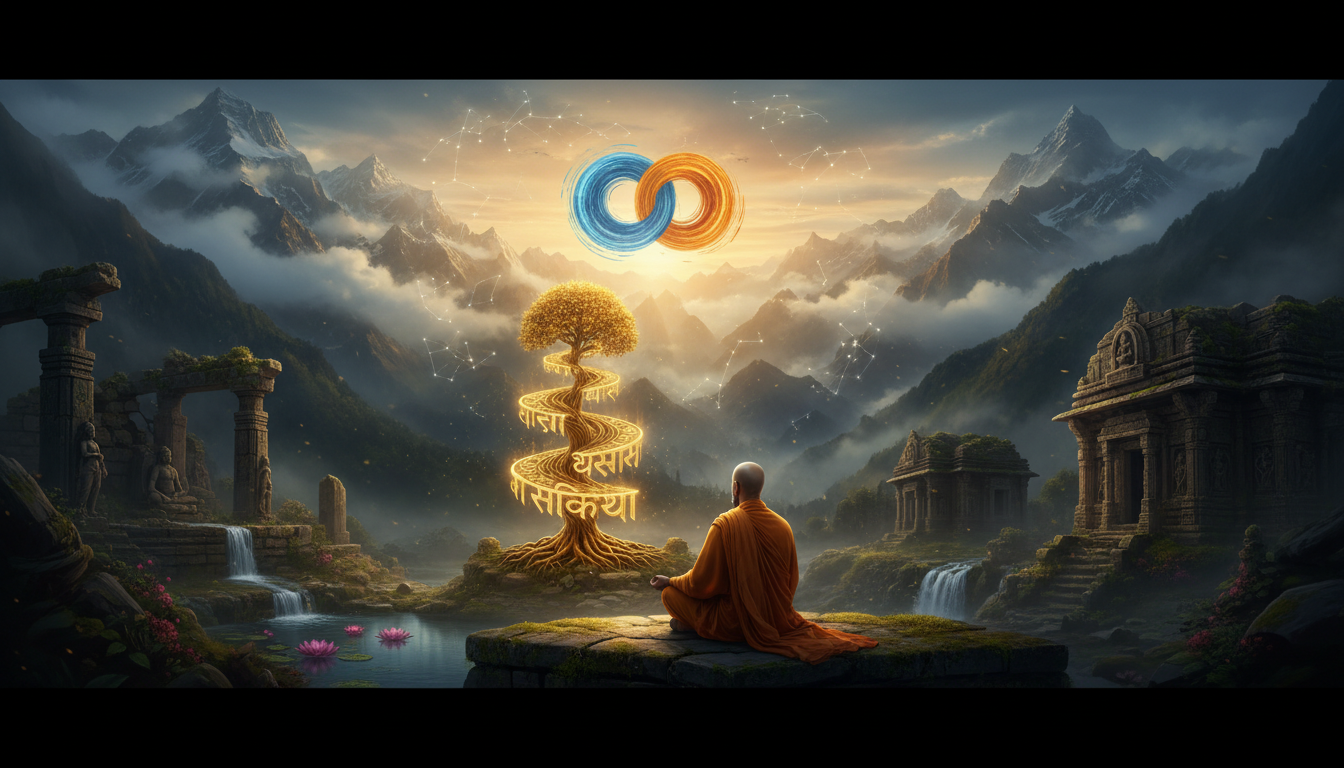
Sankhya is one of the six orthodox schools of Indian philosophy, renowned for its profound dualism that distinguishes between consciousness (Purusha) and matter (Prakriti).
This philosophical framework posits that the material world is separate from the self, providing a foundational understanding of existence and reality.
Sankhya enumerates 25 principles (tattvas) that explain the process of creation and the evolution of the cosmos, ultimately guiding individuals toward liberation (moksha) through knowledge and discernment.
Unlike other philosophies that may blur the lines between matter and spirit, Sankhya's clarity in defining these elements has influenced various spiritual and philosophical traditions, including Yoga and Vedanta.
Its emphasis on rational inquiry and categorization of experience reflects a unique intellectual heritage, contributing significantly to the broader discourse on metaphysics, ethics, and the nature of consciousness in Indian culture.