Two Realities, One Escape Route: Why Sāṅkhya Still Feels Radical
Sāṅkhya is one of India’s oldest philosophical systems, known for its strict dualism: purusha, the conscious witness, and prakriti, the changing material world. Classical Sāṅkhya does not place a creator god at the center; instead, it explains suffering as confusion between these two principles.
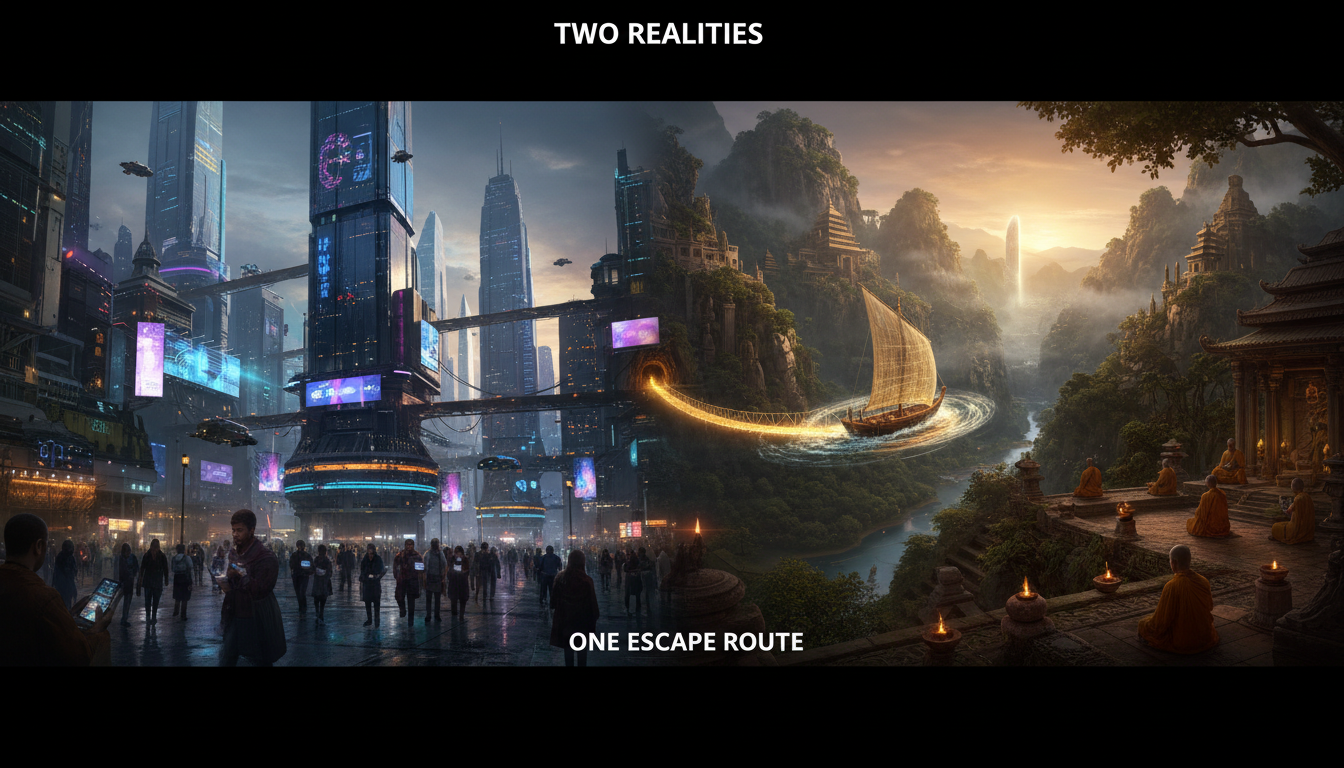
Sāṅkhya is one of India’s oldest philosophical systems, known for its strict dualism: purusha, the conscious witness, and prakriti, the changing material world.
Classical Sāṅkhya does not place a creator god at the center; instead, it explains suffering as confusion between these two principles.
Prakriti unfolds into mind, senses, ego, and the elements, while purusha remains inactive, aware, and untouched.
Liberation comes not through ritual alone but through discriminating knowledge (viveka), the clear insight that the self is not the body, mind, or emotions.
This idea deeply shaped later Hindu thought, especially Yoga, which borrows Sāṅkhya’s metaphysics while adding disciplined practice.
Its enduring force lies in a stark claim: freedom begins when one stops mistaking the changing world for the true self.