The Great Calcutta Killings of 1946
This pre-partition massacre highlights the escalating communal tensions that foreshadowed the horrors of the partition itself, revealing the violent backdrop of independence.
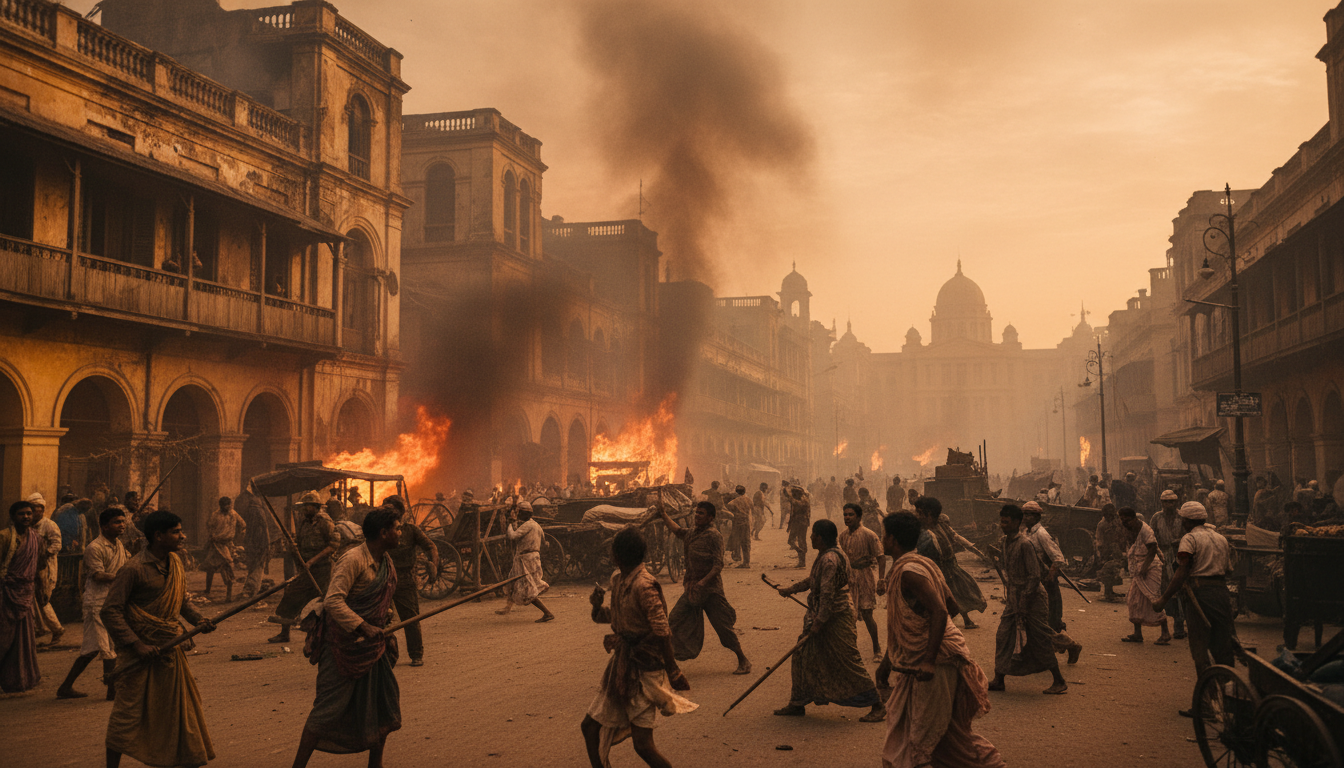
In 1946, a city that once thrived on cultural harmony was shattered by violence in an event now known as the Great Calcutta Killings.
As the sun rose on that fateful day in August, the streets of Calcutta erupted into chaos, ignited by rising tensions between Hindus and Muslims.
What started as a protest over the demand for a separate Muslim state quickly spiraled into a massacre, with mobs attacking one another, leaving thousands dead and countless more wounded.
Amidst the chaos, the city’s vibrant neighborhoods transformed into scenes of unimaginable horror.
But here’s the twist: this massacre wasn't just a spontaneous eruption of violence.
It was a prelude to the partition of India, a harbinger of the deeper communal strife that would soon engulf the subcontinent.
The leaders of the time, both British and Indian, were aware of the simmering tensions, yet they remained paralyzed, unable to stem the tide of hatred.
This tragic event served as a chilling reminder of how fragile human relationships can be and how quickly they can unravel under the weight of political ambitions.
It also raises a haunting question: if such violence could erupt in a city known for its rich tapestry of coexistence, what might that indicate about the future?
As we reflect on this dark chapter, we might wonder how history continues to shape our present and what lessons remain unlearned.
What other secrets lie hidden in the shadows of history, waiting to be uncovered?