The Event Horizon Telescope Collaboration
The Event Horizon Telescope collaboration produced the first-ever image of a black hole, offering insights into the nature of these enigmatic objects and the behavior of matter under extreme gravitati
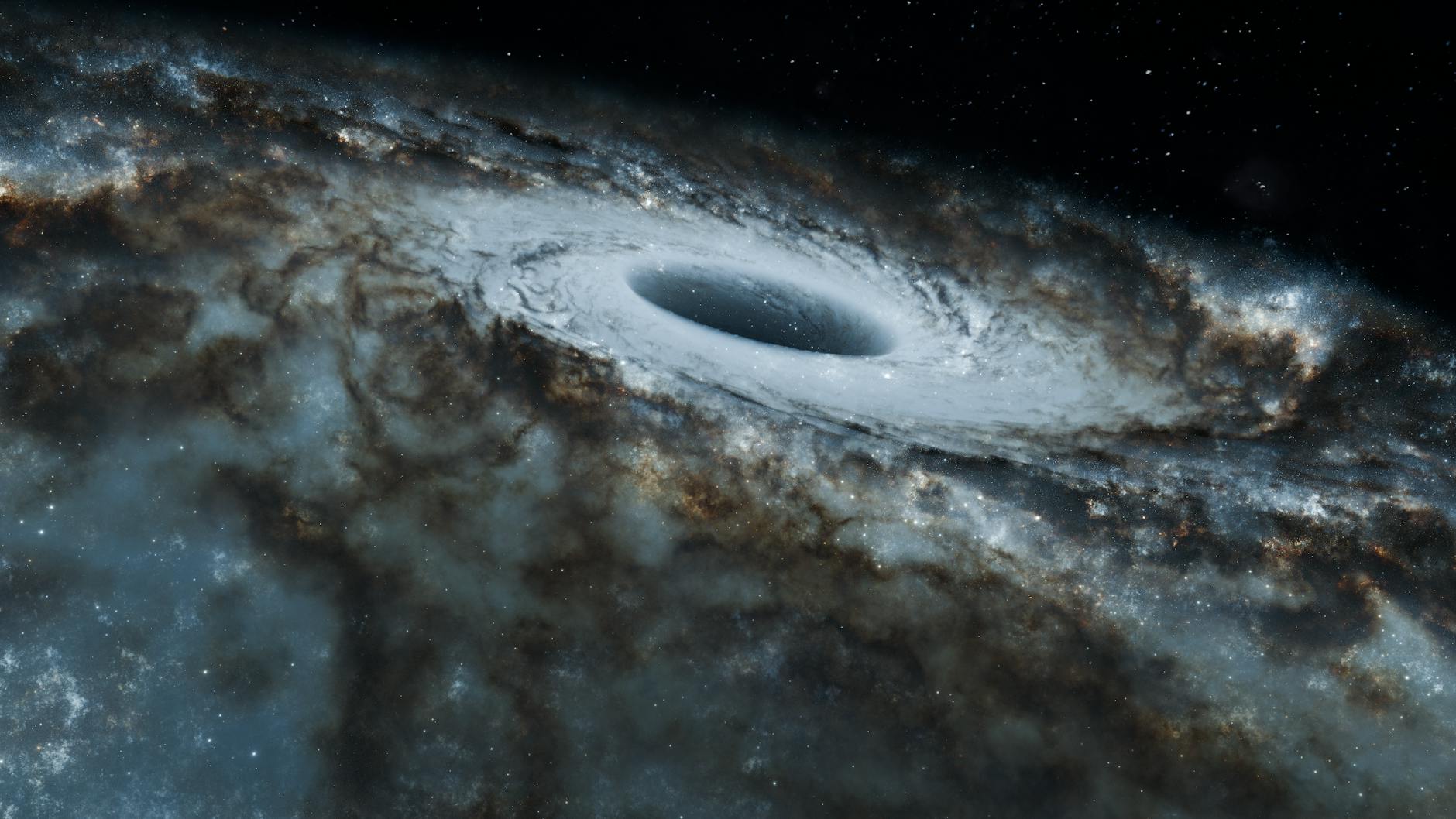
Have you ever wondered what a black hole looks like?
Well, thanks to the groundbreaking efforts of the Event Horizon Telescope collaboration, we no longer have to imagine.
In April 2019, this international team of scientists unveiled the very first image of a black hole, specifically the one at the center of the galaxy M87.
This monumental achievement not only confirmed decades of theoretical predictions but also provided us with an unprecedented glimpse into these mysterious cosmic giants.
The image itself reveals a bright ring of light surrounding a dark center, which represents the event horizon – the point beyond which nothing can escape.
But how did they manage to capture such a feat?
The answer lies in a network of eight radio telescopes scattered across the globe, working in unison to create a virtual Earth-sized telescope.
This technique, known as very long baseline interferometry, enabled researchers to achieve the resolution needed to observe something so distant and elusive.
What’s fascinating is how this discovery opens up new avenues for understanding not just black holes, but the fundamental laws of physics that govern our universe.
The implications of this work extend beyond astronomy, touching on areas such as gravity, quantum physics, and even the nature of time itself.
So, what could this mean for our understanding of the universe in the future?
As we continue to analyze the data and refine our techniques, the mysteries of black holes may hold even more secrets waiting to be uncovered.
Stay tuned for what’s next in this captivating journey into the cosmos.