The Barringer Meteor Crater
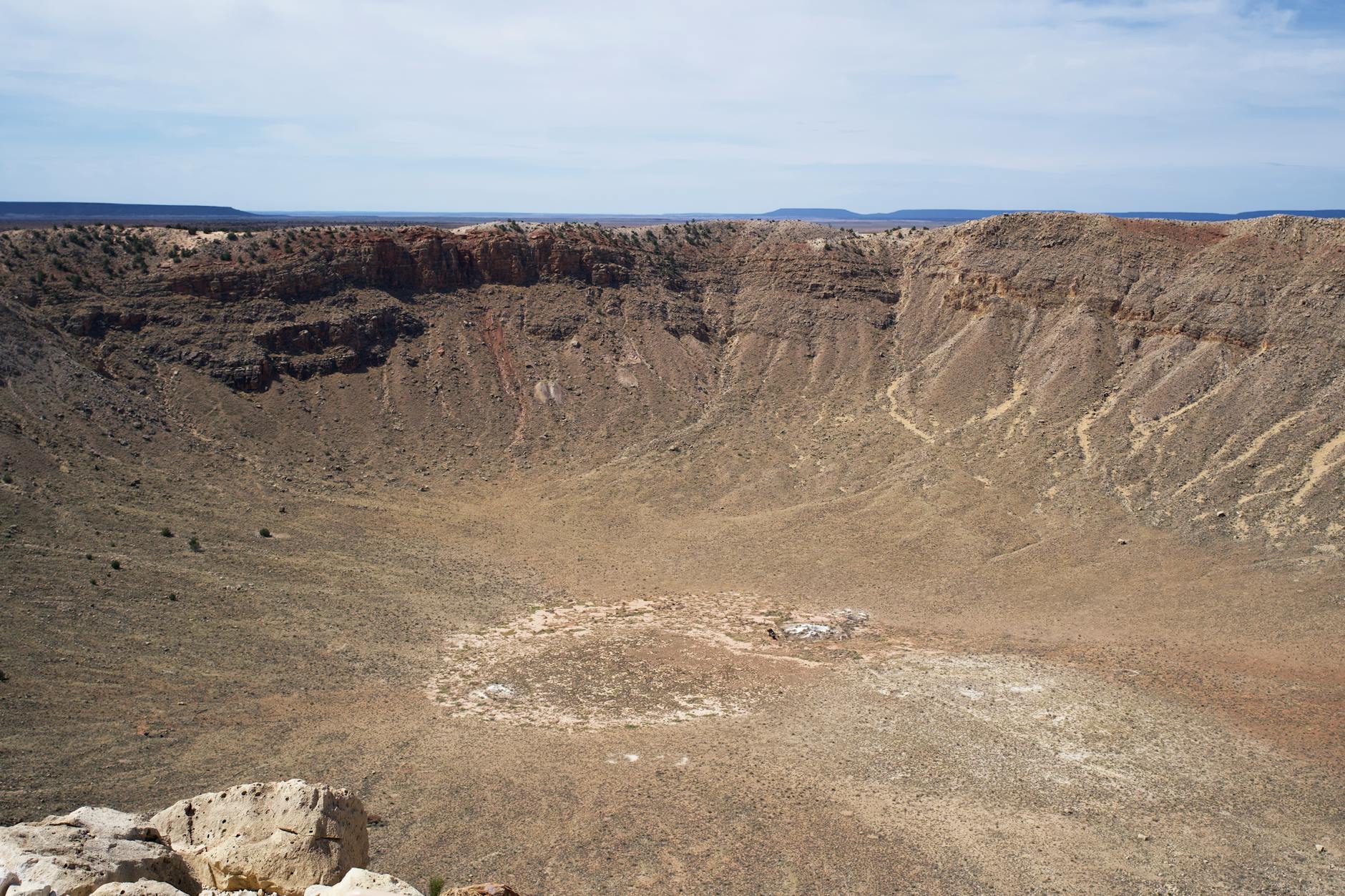
Also known as Meteor Crater, this site in Arizona serves as a prime example of a well-preserved impact crater, providing insights into the geological consequences of meteorite collisions and their his
Have you ever wondered what happens when a meteorite collides with Earth?
One of the best places to explore this phenomenon is the Barringer Meteor Crater in Arizona.
This remarkable site, also known simply as Meteor Crater, formed about 50,000 years ago when a nickel-iron meteorite, weighing around 150,000 tons, struck the Earth at an astonishing speed of nearly 28,600 miles per hour.
The impact created a massive crater over a mile wide and about 570 feet deep, a striking reminder of the forces at play in our universe.
What’s fascinating is that this crater is one of the best-preserved impact sites on our planet.
Its well-defined structure has allowed scientists to study the geological consequences of such collisions in detail.
The surrounding landscape, shaped by the impact, offers insights into the history of Earth itself and how it has been affected by space debris throughout its existence.
This site not only serves as a geological wonder but also as a valuable resource for understanding the past and preparing for future impacts.
Meteor Crater has become a popular tourist destination and continues to intrigue visitors with its size and history.
As you stand at the rim, you can almost imagine the moment when the meteor struck, unleashing energy equivalent to about 20 million tons of TNT.
What else might we learn from this crater, and how does its existence reshape our understanding of the universe?