Swadeshi Movement
Exploring the Swadeshi Movement helps to understand the immediate nationalist response to the Partition of Bengal and its significance in the larger context of Indian independence.
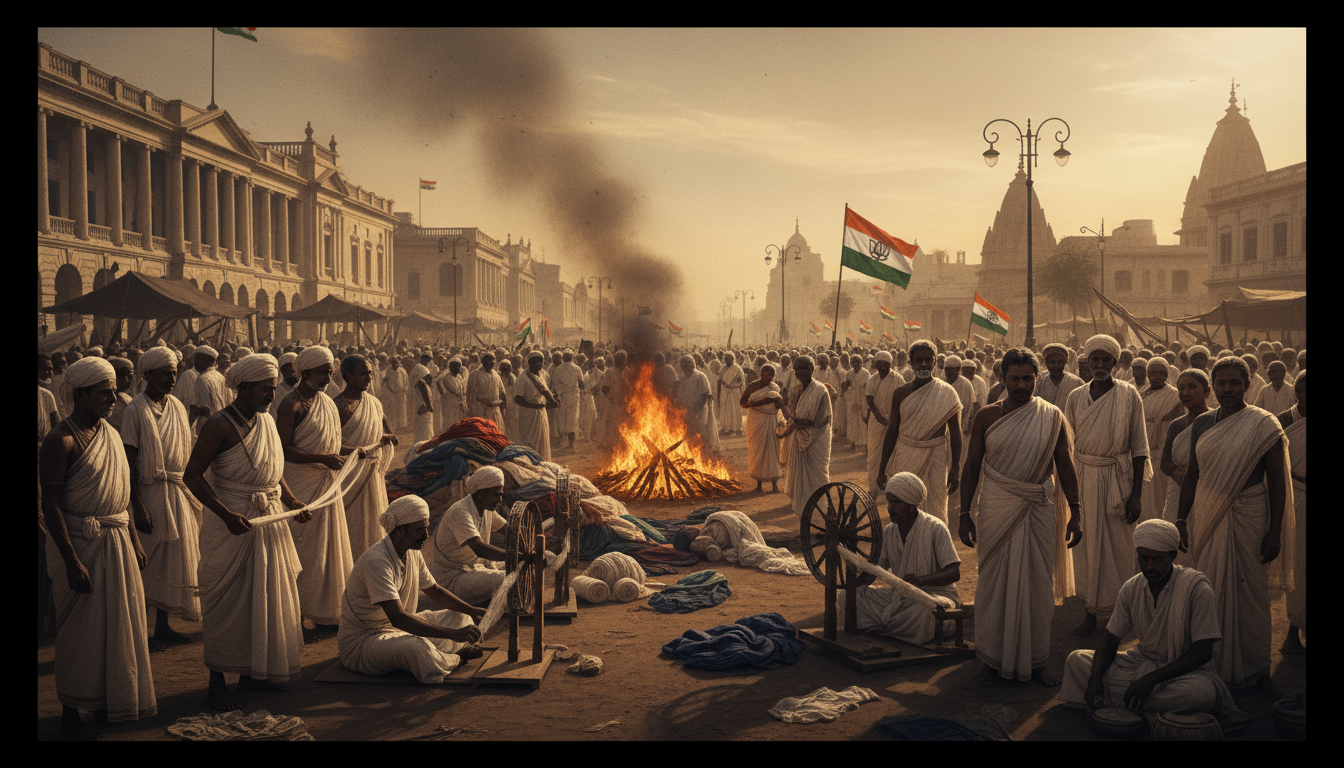
The Swadeshi Movement emerged in response to the 1905 Partition of Bengal, which the British government implemented ostensibly for administrative efficiency but was widely perceived as an attempt to divide Hindus and Muslims.
This movement sought to promote indigenous goods and boycott British products, effectively mobilizing a wide spectrum of Indian society against colonial rule.
Key figures like Bal Gangadhar Tilak and Bipin Chandra Pal championed the cause, advocating for self-reliance and national pride.
The movement not only sparked economic boycotts but also fostered a sense of unity among diverse Indian communities.
It laid the groundwork for future mass movements against British rule, marking a significant shift towards organized nationalist politics.
Ultimately, the Swadeshi Movement was instrumental in awakening political consciousness and sowing the seeds for the broader struggle for Indian independence, resonating with the sentiments of self-determination and cultural revival.