Neutrinos and Supernova Explosions
Neutrinos play a crucial role in the energy dynamics of supernovae, providing insights into how these stellar explosions occur and evolve.
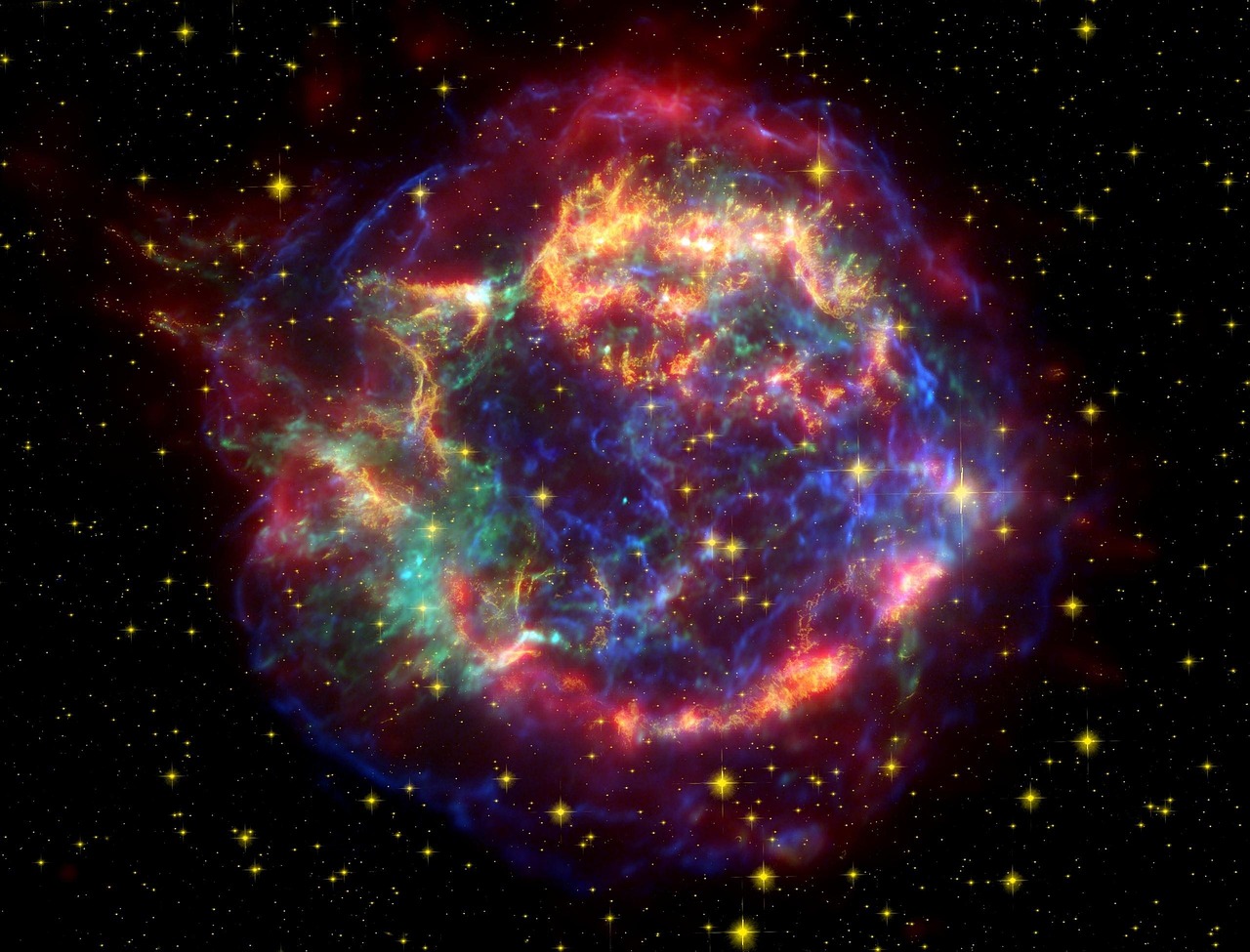
Imagine a night sky filled with brilliant stars, each a fiery furnace burning billions of miles away.
Now, picture a massive star, far larger than our sun, reaching the end of its life.
As it exhausts its nuclear fuel, it collapses under its own gravity, leading to a spectacular explosion known as a supernova.
But what if I told you that the real drama of this cosmic event unfolds not in the light we see, but in the ghostly whispers of tiny particles called neutrinos?
As the star implodes, it releases a staggering amount of energy, and in that chaos, around 100 billion neutrinos race towards Earth every second.
These elusive particles, almost massless and rarely interacting with matter, can slip through entire planets without leaving a trace.
In fact, when the supernova SN 1987A exploded, the neutrinos it emitted arrived at Earth nearly 4 hours before the light, revealing the hidden dynamics of stellar death.
This moment was a game-changer for astrophysics, showcasing how neutrinos can offer a unique glimpse into the heart of supernovae and the universe itself.
Understanding these particles not only reshapes our views on stellar explosions but also helps us unlock the mysteries of the cosmos.
So, next time you gaze up at the night sky, remember that in the dance of stars, there are whispers of secrets waiting to be uncovered.
What other hidden forces govern the universe around us?