Kapila and classical Sāṅkhya
This is the most direct next step because Kapila is traditionally linked to Sāṅkhya’s classical formulation, and it stays within the same dualist system rather than shifting to a broader philosophy su
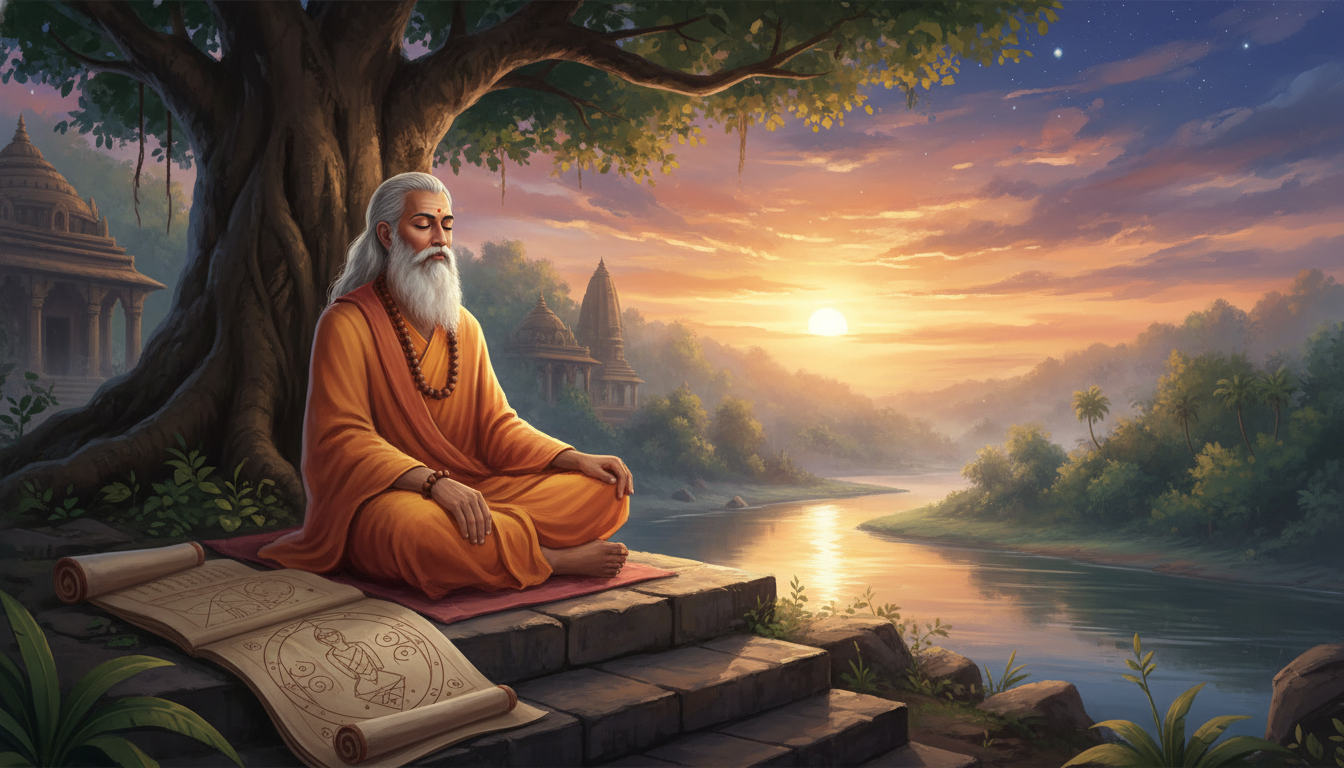
Kapila is traditionally remembered as the sage behind classical Sāṅkhya, the Indian philosophical system that explains reality through two irreducible principles: puruṣa, the conscious self, and prakṛti, primordial matter.
In later tradition he appears less as a historical author than as an authoritative founder whose name gives the school legitimacy.
Classical Sāṅkhya does not depend on a creator god; instead, it argues that suffering arises because consciousness mistakenly identifies with the changing products of nature.
Liberation comes through discriminative knowledge (viveka), which separates the witness from the material world.
The system’s analytical style, its enumeration of tattvas, and its influence on yoga, Ayurveda, and later Hindu thought made it one of the most durable strands of Indian philosophy.
Kapila’s place in this tradition shows how philosophical schools in South Asia often grew through layered memory, where doctrine, lineage, and legend reinforced one another.