Journey of Ibn Battuta to Hampi
Ibn Battuta, the famous Moroccan traveler, documented his experiences in India, including his impressions of the vibrant culture and architecture of Hampi during the Vijayanagara Empire.
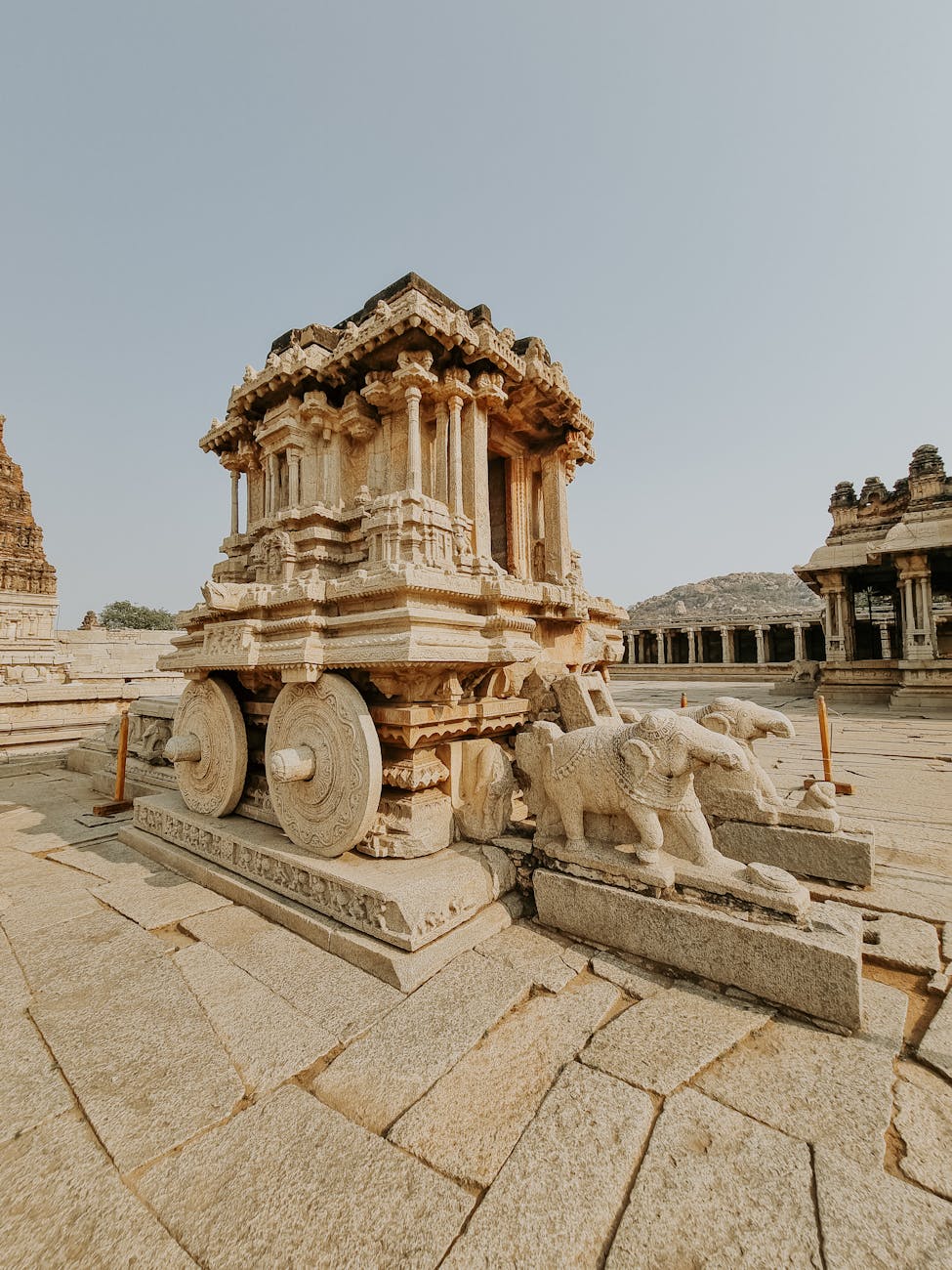
In the 14th century, a Moroccan traveler named Ibn Battuta embarked on a journey that would take him to the heart of India, where he stumbled upon a city that seemed to rise from the pages of a fairy tale.
Imagine him, with his tattered robes and weathered sandals, wandering through the sprawling ruins of Hampi, a city that was once the capital of the Vijayanagara Empire.
The air was thick with the scent of spices, and he could hear the distant sounds of artisans hammering away at their crafts, a symphony of culture and life pulsating through the streets.
But what astonished him most were the temples, their towering stone structures adorned with intricate carvings that seemed to tell stories of gods and kings.
And then, it struck him: Hampi, with its vibrant bazaars and grand architecture, was not just another stop on his journey; it was a testament to the ingenuity and spirit of a civilization that thrived in a time of great upheaval.
This city, he realized, was a melting pot of cultures, where Hindu, Muslim, and even Persian influences intertwined, creating a unique tapestry of life.
Ibn Battuta's observations remind us that the world has always been a rich mosaic of stories and connections, waiting to be explored.
And as we delve into the past, we may find echoes of those ancient travelers in our own lives, curious and eager to discover the world around us.
What other hidden gems lie waiting in the annals of history, eager to be uncovered?