Indus Valley Civilization's Decline
The disappearance of the Saraswati River is closely linked to the mysterious decline of the Indus Valley Civilization, raising questions about environmental changes and urban collapse.
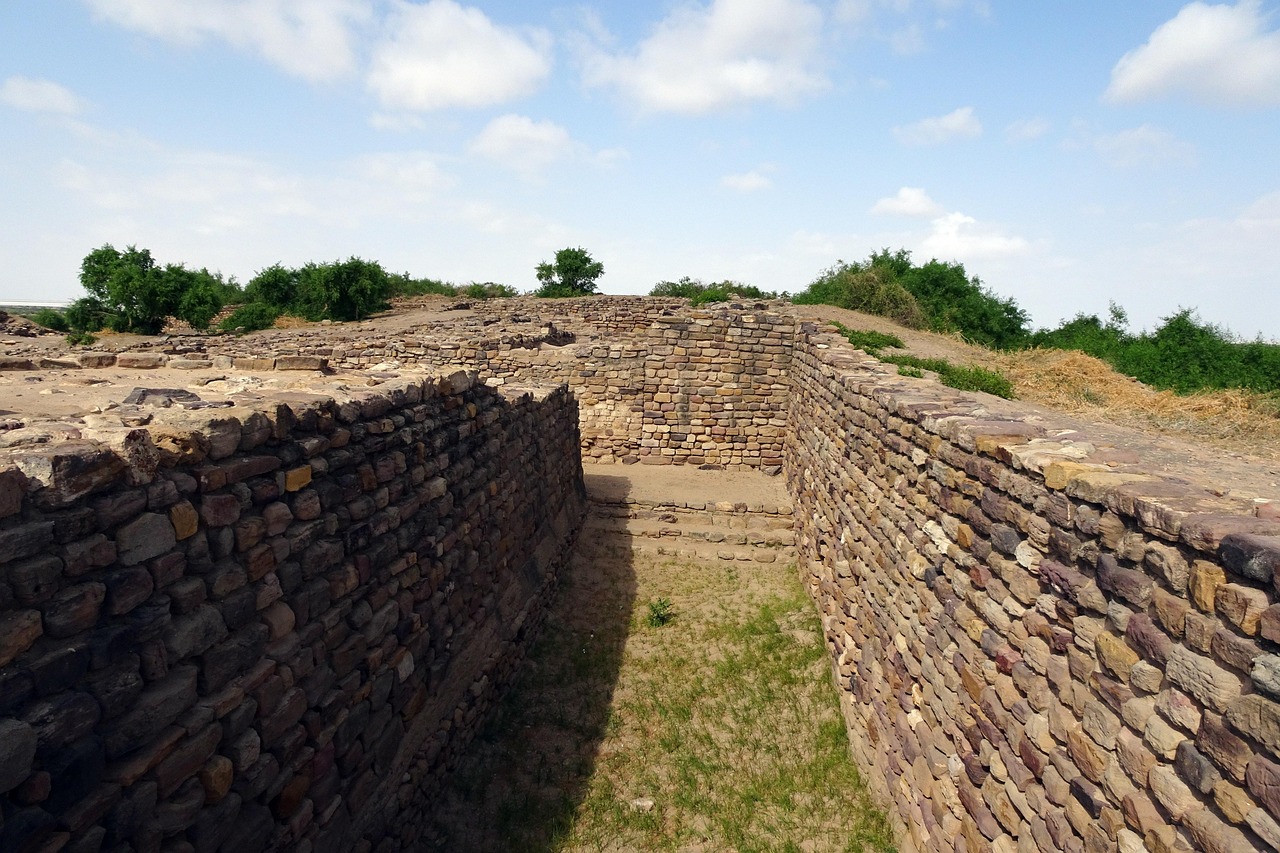
In the heart of the Indian subcontinent, a sprawling civilization thrived over 4,000 years ago, boasting advanced cities like Harappa and Mohenjo-Daro.
But what if I told you that this remarkable society vanished almost overnight, leaving behind only whispers of its greatness?
The key to this enigma lies in a river that no longer flows: the Saraswati.
Picture vast plains once nourished by its waters, where farmers cultivated fertile fields and traders navigated bustling markets.
But as time wore on, tectonic shifts altered the landscape, and the mighty Saraswati began to dwindle, turning from a life-giving river into a mere trickle.
With the loss of their water source, the Indus Valley inhabitants faced droughts and food shortages, leading to urban decay and a mass exodus.
It’s astonishing to think that an entire civilization could collapse due to the disappearance of a single river.
This serves as a stark reminder of how deeply intertwined our lives are with the environment.
Just as the Saraswati shaped the rise of one of history’s earliest urban cultures, today, we must consider how our own actions impact the delicate balance of nature.
What if the next great civilization faces a similar fate?
The echoes of the past beckon us to pay attention.
What other secrets lie buried beneath the sands of time, waiting to be uncovered?