Indian National Army's Creation
The formation of the Indian National Army under Bose's leadership highlights the revolutionary strategies employed to combat colonial rule during World War II.
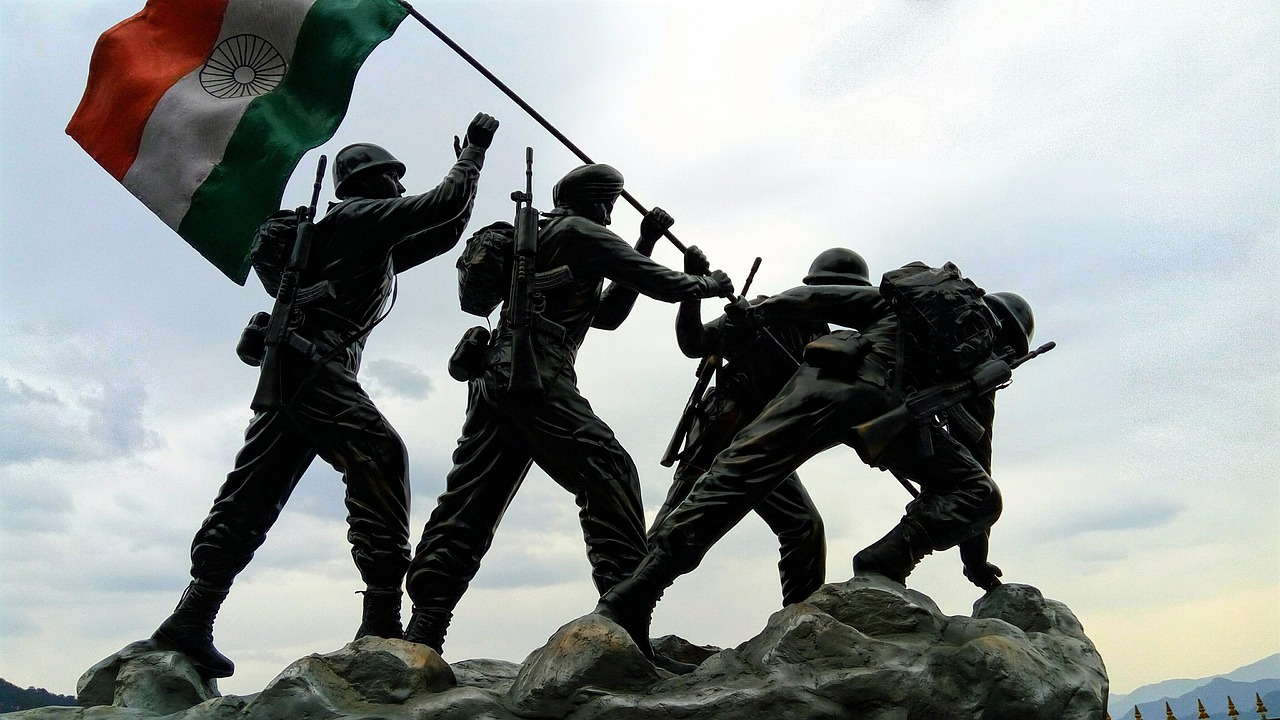
In 1942, a group of Indian soldiers found themselves in a foreign land, but instead of being just a part of the British military, they were about to embark on a mission that would shake the very foundations of colonial rule.
Led by the charismatic Subhas Chandra Bose, these soldiers were determined to transform from mere warriors into the architects of India’s freedom.
In the dense jungles of Southeast Asia, they formed the Indian National Army, a force that sought to liberate India from British rule by any means necessary.
But here’s where it gets fascinating: Bose wasn’t just rallying soldiers; he was pioneering a revolutionary strategy that involved forging alliances with Japan, a country that was also fighting against the British.
Imagine the audacity!
In a time when most would see their enemies as adversaries, Bose saw an opportunity.
He envisioned a united front against colonialism, even if it meant aligning with former foes.
This bold move led to the formation of the Azad Hind government, which claimed sovereignty over India and took significant steps to gain international recognition.
The insight?
Bose’s efforts to create the Indian National Army were not merely about military might; they were a radical rethinking of how liberation could be achieved on the global stage.
His vision forced the British to reconsider their hold on India, igniting a sense of nationalism that would later surge through the country.
This story is a reminder that sometimes, the most unexpected alliances can lead to monumental changes.
What if we looked at our world today and found new paths to resolve conflicts?
Who else might we partner with for a common cause?
The possibilities are intriguing, aren't they?