Impact of Papal Trials on Church Authority
The Cadaver Synod set a precedent for how political power struggles could influence church authority, leading to future conflicts within the Catholic Church.
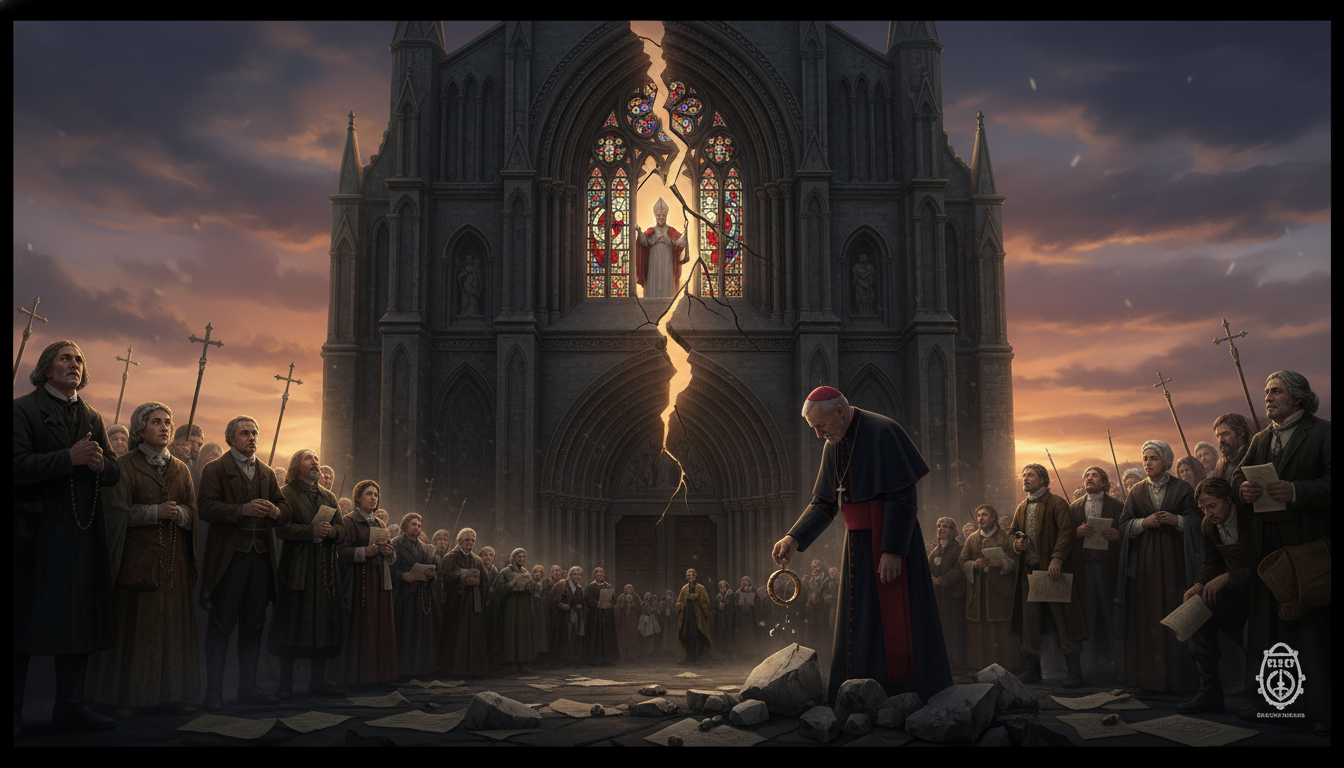
In the year 897, a bizarre event unfolded in Rome that would alter the course of church history.
Imagine a courtroom filled with priests, nobles, and a crowd of onlookers, all fixated on a rotting corpse propped up on a throne.
This was the infamous Cadaver Synod, where Pope Stephen VI put the deceased Pope Formosus on trial.
The air was thick with tension as the lifeless body, dressed in papal vestments, faced accusations of perjury and violating church law.
What could possibly drive a sitting pope to desecrate the memory of a predecessor in such a grotesque manner?
The answer lies in the fierce political rivalries of the time.
Stephen was seeking to bolster his own authority by dismantling Formosus's legacy, proving that even the highest spiritual leaders could fall victim to earthly power struggles.
The twist here is that this bizarre trial set a dangerous precedent, showcasing how the church's authority could be manipulated by political ambitions, leading to a series of conflicts that would echo through the centuries.
This shocking event reminds us that the fragile relationship between power and faith has long been a battleground.
And as we ponder the influence of politics on religion, one wonders: what other hidden events shaped the world we live in today?