Galileo's Conflict with the Church
Galileo Galilei's support of heliocentrism challenged the Catholic Church's geocentric views, illustrating how the dissemination of scientific ideas via the printing press sparked profound socio-relig
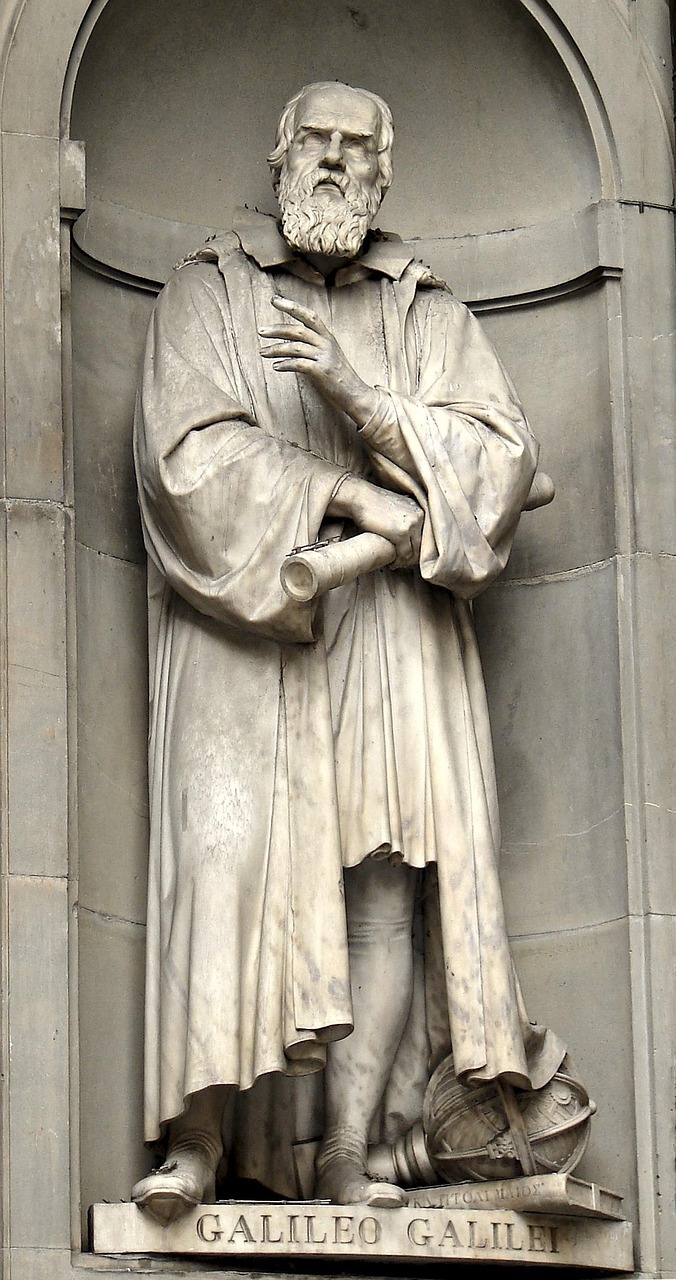
Imagine a world where the sun was believed to revolve around the Earth, and any suggestion otherwise could lead to dire consequences.
This was the reality in the early 17th century when Galileo Galilei, an Italian astronomer and physicist, began to challenge the long-held geocentric views of the Catholic Church.
Through his pioneering observations using a telescope, Galileo discovered moons orbiting Jupiter and the phases of Venus, evidence that strongly supported the heliocentric model proposed by Copernicus.
But why did this infuriate the Church?
It wasn’t just about the science; it was about authority.
The Church held a powerful position, and any deviation from its teachings was seen as a direct threat to its influence.
As Galileo published his findings, the printing press played a crucial role in disseminating these revolutionary ideas, allowing them to reach a wider audience than ever before.
This sparked not only scientific debates but also deep socio-religious conflicts.
The Church eventually condemned Galileo's works as heretical, leading to his infamous trial in 1633, where he was forced to recant his views.
But even under house arrest, Galileo continued to work, leaving behind a legacy that would inspire future generations.
His story serves as a profound reminder of the tension between science and belief systems.
How does this historical conflict resonate in today's discourse on science and religion?
What lessons can we learn from Galileo's struggle?
Stay tuned as we explore the ongoing battle between scientific discovery and established doctrine.