British Response: The Government of India Act 1858
In reaction to the Revolt of 1857, the British government abolished the East India Company's rule, directly leading to the establishment of direct British governance in India.
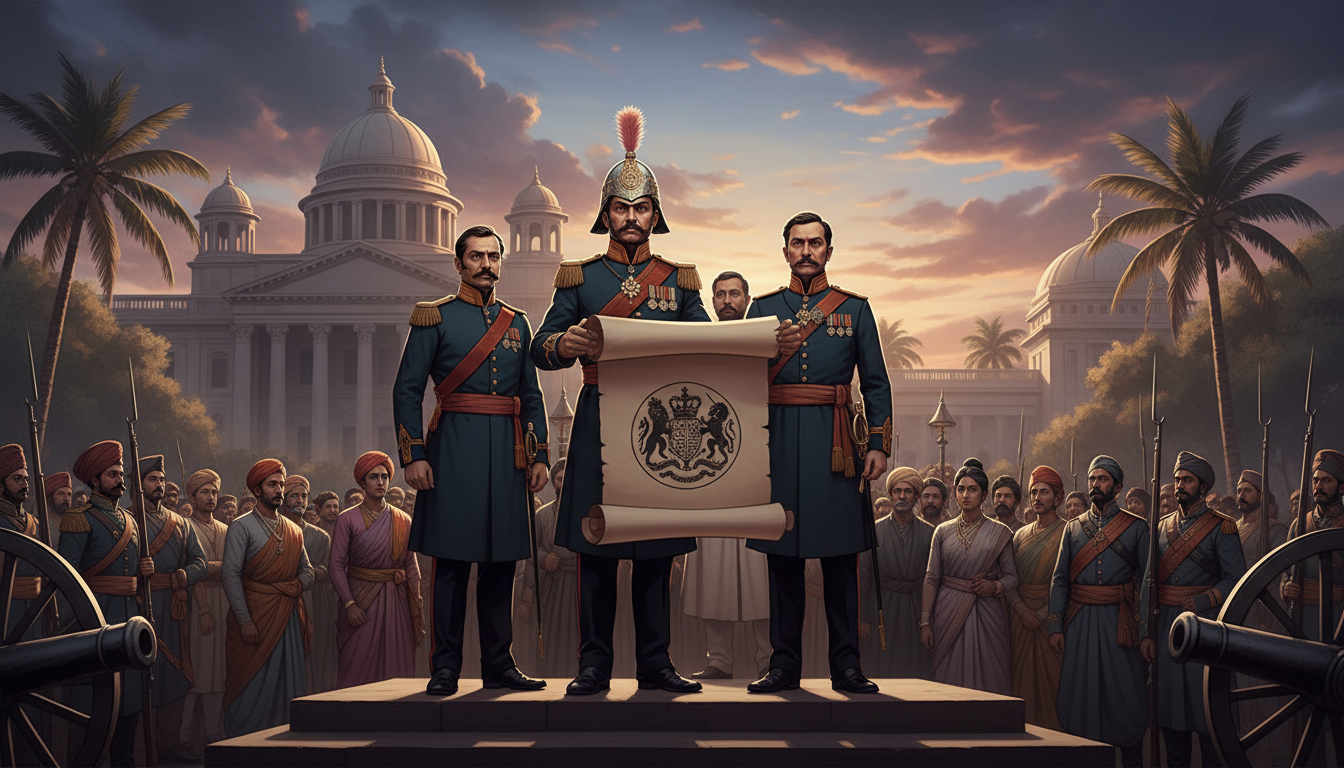
In 1858, a revolt in India sent shockwaves through the British Empire, leading to a decision that would forever alter the course of history.
Picture this: a sprawling subcontinent, rich in culture and diversity, yet torn apart by conflict as Indian rebels rose against the oppressive rule of the East India Company.
This uprising, known as the Revolt of 1857, was not just a mere skirmish; it was a desperate cry for freedom that echoed across the land.
And then, in a dramatic twist, the British government took a bold step.
Instead of merely quelling the rebellion, they abolished the East India Company’s control, a move that surprised many.
Overnight, India was no longer governed by a trading company but directly ruled by the British Crown itself.
This shift marked the beginning of a new era known as the British Raj, where India would be administered as a colony rather than a business venture.
The insight here is striking: a revolt intended to liberate the nation inadvertently led to even tighter British control.
It’s a stark reminder of how revolutions can result in outcomes far removed from the original intent, often leaving behind a complex legacy of power and governance.
So, as we reflect on this pivotal moment, we must ponder the paradox of rebellion: could it sometimes lead to the very thing one is fighting against?
And what other surprising twists of fate might history hold for us?